
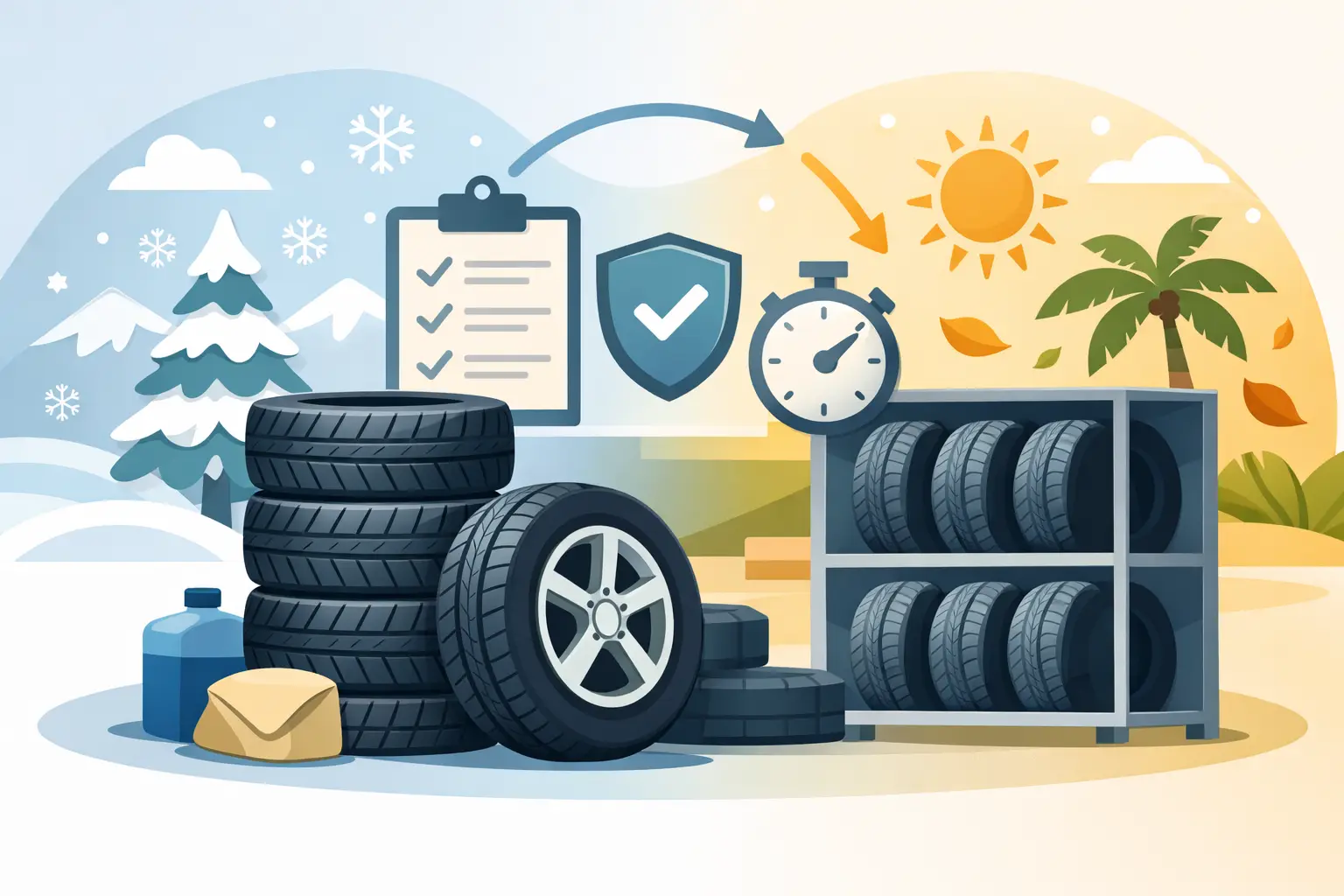
The rush hits fast when the weather turns. One week your storage area looks under control, and the next week your team is digging through stacks, double-checking tags, and trying to match the right tire set to the right customer before the next appointment rolls in. That is exactly why best practices for seasonal tire storage management matter. Good storage systems do more than keep tires off the floor. They protect inventory, reduce service delays, and help your shop stay organized during the busiest changeover months.
For tire shops, repair facilities, and dealerships, seasonal storage is an operations issue first. If the process breaks down, it shows up everywhere – at the service counter, in the bay schedule, in customer wait times, and in avoidable mistakes. The shops that handle volume well usually are not doing anything complicated. They are following consistent storage procedures, labeling clearly, and building a system their staff can repeat under pressure.
Best practices for seasonal tire storage management start with intake
The biggest storage problems usually begin before the tires ever reach the rack. Intake needs to be structured, fast, and standardized. Every tire set should be tied to the customer record immediately, with the vehicle details, storage date, tire type, and position if needed. If your team waits until later to organize that information, mix-ups become much more likely.
A clean intake process also helps you spot issues early. If a set has unusual wear, sidewall damage, or a tire that should not be stored for another season, your staff can flag it before it disappears into inventory. That protects your customer and saves an uncomfortable conversation six months later.
Labels play a bigger role here than many shops admit. Handwritten notes on tape may work when you store a few dozen sets. They stop working when you are managing hundreds. Durable, easy-to-read storage labels give your staff a quick way to identify the set, confirm customer details, and move the tires through intake, storage, and retrieval without second-guessing.
Build a storage system around retrieval, not just space
Many shops organize tire storage based on where they can fit the most inventory. That makes sense on paper, but it often creates slow retrieval and unnecessary handling when the season changes back. A better approach is to think about how tires come out, not only how they go in.
If your team has to move several sets to reach one customer’s tires, labor costs go up and damage risk goes up with them. The most efficient storage layouts account for turnover cycles, common appointment windows, and the practical limits of your staff and shelving. High-density storage can be useful, but only if retrieval remains manageable.
For example, storing by season and service date often works better than storing purely by customer name. Some businesses also separate high-frequency accounts, fleet vehicles, or premium wheel-and-tire packages into more accessible sections. There is no single perfect layout. The right answer depends on your volume, your physical space, and how often your staff needs to access stored sets outside the main seasonal rush.
Protect the tires and the wheels while they are stored
Storage management is not only about knowing where tires are. It is also about keeping them in serviceable condition. Tires should be stored in a clean, dry, temperature-stable area away from direct sunlight, excessive heat, and chemicals that can affect rubber over time. That is basic, but many back-room storage spaces fall short once they start getting crowded.
Mounted and unmounted tires also have different storage needs. Wheels with mounted tires often require extra care to prevent cosmetic damage, especially for customers with alloy rims or higher-end packages. Staff should avoid dragging sets across rough floors or stacking them carelessly during intake and retrieval. A scratched wheel may seem minor in the shop, but to the customer it is a service failure.
It also pays to be realistic about storage duration. Some customers leave seasonal tires with the shop for much longer than expected. If your process does not include periodic review of aged inventory, abandoned sets can quietly eat up valuable space. Good management includes a policy for contact attempts, retention periods, and disposal procedures where permitted.
Labeling should be simple enough to survive busy season
A storage system is only as strong as the information attached to each set. If labels smear, peel, or use inconsistent naming, your team ends up relying on memory. That is where errors happen.
The best labeling systems are easy to read at a glance and consistent across every stored set. Vehicle year, make, model, customer name or account number, storage date, and tire position are common fields. Some shops add bay notes, tread depth, or service recommendations, especially if the next seasonal swap may require additional approval from the customer.
This is also where printed tire storage stickers and labels earn their keep. Standardized labels cut down on handwriting issues, speed up intake, and help every employee follow the same process. For operations-focused shops, that consistency matters more than appearance alone. A dependable print supplier that understands automotive service workflows can make a real difference here because the label is part of the process, not an afterthought.
Use your tire storage process to support better customer communication
Seasonal storage should make the next visit easier for the customer, not just easier for your team. If a stored set is already documented properly, your staff can confirm condition, prepare recommendations, and schedule changeovers with fewer surprises. That creates a more professional experience and improves trust.
This is especially useful when a customer’s stored tires are nearing replacement. Instead of discovering worn tread during a rushed installation appointment, your team can review the record ahead of time and contact the customer with options. That turns storage from a passive service into a useful touchpoint.
Reminder stickers, service labels, and storage records all work better when they support one another. If your internal documentation is clear, your outbound reminders become more accurate. Customers are more likely to return when your shop looks prepared and communicates clearly about what is already on site.
Train for consistency, not heroics
A common mistake in seasonal tire storage management is relying on one experienced employee to keep the whole system together. That may work until that person is off for the day, leaves the business, or gets overwhelmed during peak season. Strong operations are built on repeatable process, not memory.
Training should cover intake, inspection, labeling, placement, retrieval, and exception handling. It should also be simple enough for new staff to follow without slowing down the whole department. If your process only works when your most experienced advisor is around, it needs work.
Short written procedures help. So do clearly marked zones, shelf numbering, and standard label formats. The point is not bureaucracy. The point is reducing hesitation when the shop is busy and every minute counts.
Audit your storage area before the season, not during it
The best time to fix storage issues is before customers start calling for appointments. A pre-season audit gives you a chance to remove outdated inventory, verify labels, check shelf locations, and confirm that your records still match what is physically in storage.
This step gets skipped because it does not feel urgent. Then peak season arrives and small errors turn into service delays. A missing label, a duplicate customer name, or an unmarked wheel set can create a bigger bottleneck than most managers expect.
Even a basic audit pays off. Confirm counts, inspect the condition of older stored sets, and make sure your labels and reminder materials are stocked before intake volume spikes. If you are waiting until the rush begins to reorder operational print items, you are already behind.
Know where efficiency matters and where care matters more
There is always a trade-off between speed and handling. During busy season, everyone wants faster turnaround. But pushing retrieval too hard can lead to damaged wheels, misplaced inventory, or incomplete records. The better approach is to identify where speed truly matters and where extra care saves money.
For example, standard passenger sets may move quickly through a straightforward process, while specialty wheels, staggered setups, and higher-value packages may need more detailed tagging and more careful storage placement. Treating every set exactly the same can create its own problems. Best practices are consistent, but they still leave room for practical judgment.
If you serve both retail and dealership customers, your process may also need different standards by account type. Dealership volume can demand tighter scheduling discipline, while retail storage may require more direct customer communication. It depends on the business mix.
Seasonal tire storage works best when it feels boring. Tires come in, they are labeled properly, stored properly, found quickly, and returned in good condition. That kind of routine does not happen by accident. It comes from clear process, durable labeling, and a system built for the way your shop actually operates. If your next busy season is already on the calendar, now is the right time to tighten the parts of the process your team should not have to think about twice.