A lot of printed materials get ordered once, then forgotten in a drawer. Dealer ID stickers are different when they are set up properly. They stay in circulation, show up on vehicles customers actually drive every day, and quietly keep your dealership or shop name in front of the next service decision.
For service departments, used car operations, repair shops, and dealerships, that matters. A good dealer ID sticker does more than identify where the vehicle came from. It supports brand recall, adds a professional touch at delivery, and helps create consistency across your service process.
What dealer ID stickers are really for
Dealer ID stickers are small identification labels placed on a vehicle to show the selling dealer, servicing location, or business contact details. In practice, they often include a company name, phone number, website, and sometimes a logo or stock number reference.
That sounds simple, but the business value is broader than the label itself. When a customer needs service, wants to refer a friend, or is trying to remember where they bought the vehicle, a visible and durable sticker shortens the gap between memory and action. It gives them a quick reference without asking them to search old paperwork or dig through emails.
For busy operations, that kind of low-friction branding is useful because it keeps working after the sale. Unlike a flyer or handout, it remains attached to the vehicle and continues doing its job with no extra effort from your staff.
Why dealer ID stickers still matter in a digital-first business
Most dealerships and shops already invest in CRM tools, email reminders, and text campaigns. Those systems matter, but they depend on correct data, customer opt-ins, and attention at the right moment. Dealer ID stickers work differently. They are physical, immediate, and always present.
That matters in everyday situations. A customer may not remember the exact dealership name, but they can look at the vehicle and find it. A family member driving the car may notice the sticker and call your service department. A used vehicle changing hands can still carry your name if the sticker remains in place.
There is a trade-off, of course. A sticker will not replace digital retention tools, and it should not be treated as your only follow-up channel. But as part of a broader retention system, it is one of the lowest-cost items you can order with ongoing visibility built in.
Where dealer ID stickers work best
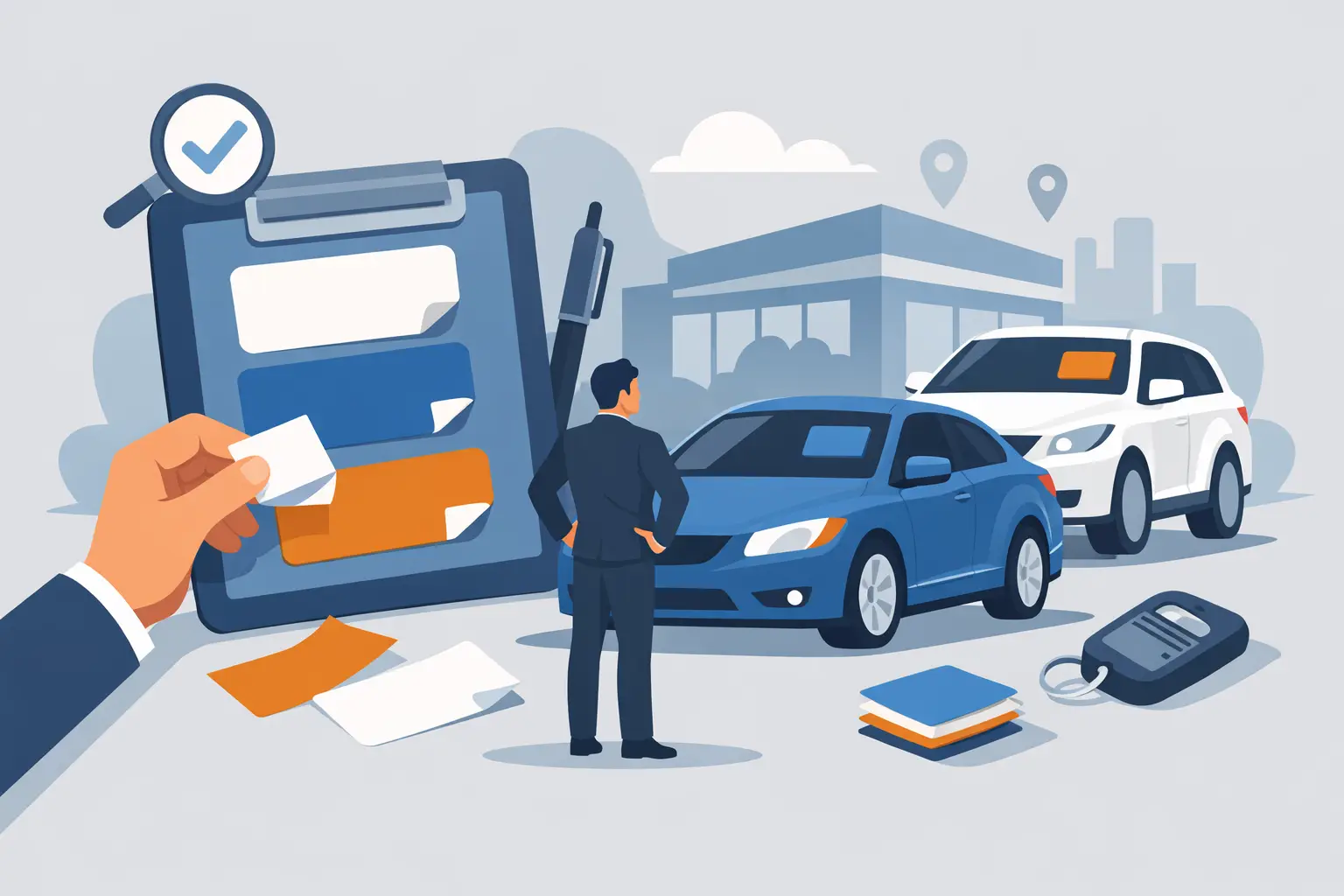
Placement affects whether a sticker looks professional or gets ignored. Most businesses use dealer ID stickers on rear glass or another clean, visible area where the branding is easy to read without getting in the driver’s way.
The best placement depends on the vehicle type, your local practices, and the look you want. Rear window placement is common because it offers visibility and keeps the sticker separate from service reminder labels. Some operations prefer a smaller, more discreet location that still stays legible up close.
The main point is consistency. If every vehicle leaves with the sticker in a different place, the result can look rushed. Standardizing placement across your delivery or service team helps your branding look deliberate instead of improvised.
What makes a dealer ID sticker worth ordering
Not all dealer ID stickers perform the same way. For a business ordering in volume, the difference usually comes down to material, print clarity, adhesive behavior, and layout.
A sticker that fades quickly or curls at the edges reflects poorly on the business using it. The customer may not know what stock was used, but they will notice when a label looks worn long before the rest of the vehicle does. That is why durable materials and clean printing matter. You want something that stays readable and presentable through weather changes, car washes, and normal use.
Layout matters just as much. A crowded sticker with too much text can defeat its own purpose. In most cases, the strongest design is straightforward: business name, phone number, and a simple brand mark or short web address. If the text has to be squinted at, it is not doing enough work for you.
Custom vs generic dealer ID stickers
This is where purchase decisions usually come down to operational priorities.
Custom dealer ID stickers give you brand consistency. They reinforce your business name, match your existing visual identity, and create a more polished handoff at delivery. For dealerships and established service operations, custom is usually the better long-term choice because it strengthens recognition every time the vehicle is seen.
Generic options can still make sense in certain situations. If you need a temporary identification label, internal lot use, or a quick solution for a lower-volume process, a simpler format may be enough. The trade-off is that generic labels do less for brand building and customer retention.
If the sticker will be customer-facing and remain on the vehicle after delivery, custom usually earns its keep.
How dealer ID stickers support repeat business
A lot of retention spending happens after the customer has already left. Dealer ID stickers start working once the vehicle is back in daily use. That makes them especially useful for businesses that rely on repeat service, trade-ins, and referrals.
When a customer returns for maintenance, every reminder that helps them remember your name has value. A sticker will not create loyalty by itself, but it supports the kind of repeated visibility that keeps your business familiar. Familiarity matters when the customer is choosing where to book their next oil change, tire service, inspection, or repair.
For used car departments, dealer ID stickers can also help preserve dealership presence beyond the original transaction. Even if the vehicle changes owners, your information may still be visible. That creates another chance for your brand to stay in the local market without additional advertising spend.
Common ordering mistakes to avoid
The biggest mistake is treating dealer ID stickers like a throwaway item. When businesses do that, they often choose a design that is too small, too cluttered, or made from stock that does not hold up.
Another common issue is ordering without thinking through workflow. If the stickers arrive but there is no standard process for applying them, usage becomes inconsistent. One staff member applies them carefully, another skips them, and another places them wherever there is space. Over time, that inconsistency weakens the result.
It also helps to avoid overdesign. A dealer ID sticker is not a brochure. Keep it readable, branded, and easy to identify at a glance. Practical design tends to outperform flashy design here.
Choosing a supplier for dealer ID stickers
If you reorder regularly, your supplier matters almost as much as the sticker itself. You need dependable print quality, materials suited for automotive use, and turnaround times that fit the pace of your operation.
This is not a one-time marketing piece. Dealer ID stickers are a repeat-use business product, so consistency from order to order matters. If color shifts, sizing changes, or adhesive performance varies, your process gets harder to manage. A supplier focused on automotive service print products will usually understand those requirements better than a general printer handling a little bit of everything.
That is also where product range can help. Many shops and dealerships order dealer ID stickers alongside oil change stickers, service reminders, tire labels, and other routine printed items. Working with one reliable source can simplify purchasing and keep your front-line materials aligned. StickerPlanet Canada is built around that kind of repeat-use operational print need.
How to know if your current stickers are doing the job
A simple test is to look at vehicles that left your business 60 to 90 days ago. If the sticker still looks clean, readable, and properly attached, you are probably in good shape. If it is fading, peeling, or hard to read, the product is underperforming.
You should also ask whether the sticker is being applied consistently and whether customers can actually use the information on it. If your phone number is tiny or the logo overwhelms the contact details, the sticker may look branded without being especially useful.
The best dealer ID stickers are not complicated. They are readable, durable, and easy for staff to use as part of the normal delivery or service process.
If you are ordering them for the first time or replacing a weaker product, think less about decoration and more about daily function. A well-made sticker is a small item, but in a business built on repeat service and name recognition, small items that keep working tend to earn their place.