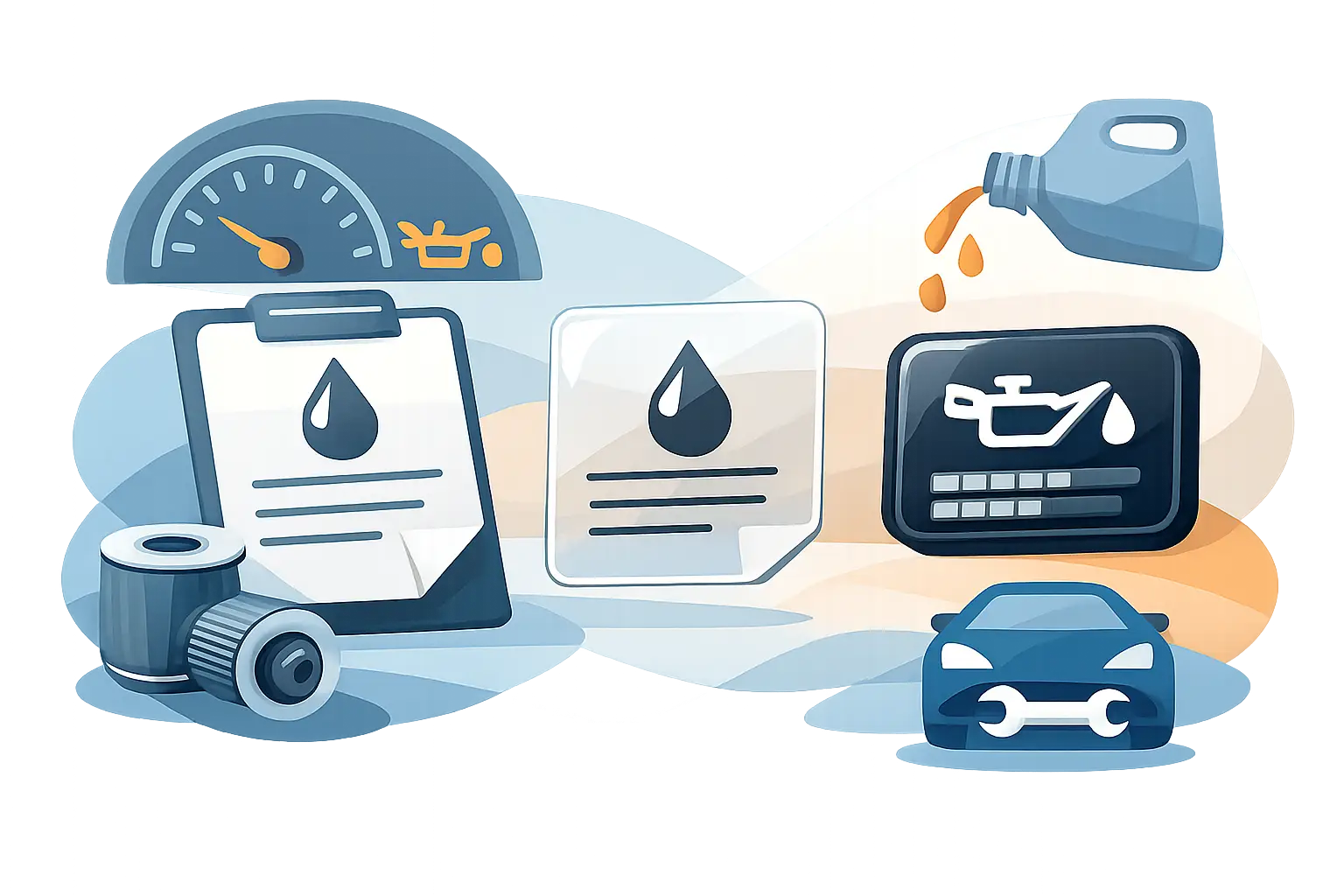
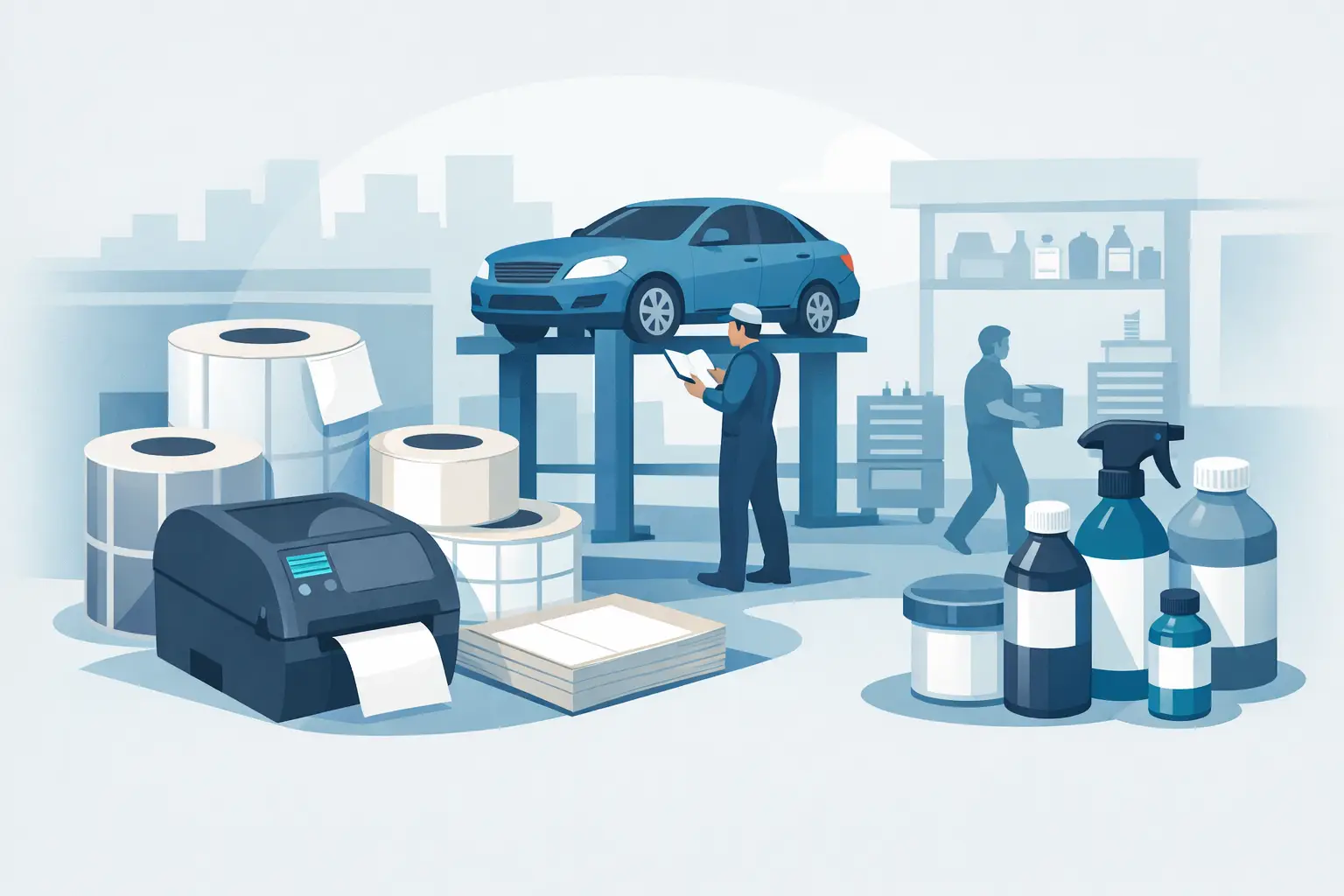
A service reminder sticker has a short but demanding job. It must stay readable on a windshield, hold its position through temperature swings, and present the next service date or mileage clearly enough that the customer notices it. That is why north american label materials matter to repair shops, tire centers, oil change businesses, and dealerships. Material quality affects whether a reminder does its job long after the vehicle leaves the bay.
A low-cost label may look acceptable when it first comes off the press. Problems show up later: adhesive edges lift, handwriting smears, printed details fade, or the label becomes difficult to remove when the next service is due. For businesses that rely on repeat service, these are not minor details. Every reminder sticker is a small piece of customer communication and a practical prompt to come back.
What North American Label Materials Mean in Daily Use
The term refers to label stocks, adhesives, liners, and related components produced within North American supply chains. For a working shop, the benefit is not simply where a material originates. It is the consistency behind the finished product.
Reliable material specifications help a print supplier produce labels that behave the same way from one order to the next. That matters when your team applies hundreds of oil change stickers, tire rotation reminders, re-torque labels, or detailing reminders every month. You should not have to wonder whether the next batch will write the same, stick the same, or fit the same process at your service counter.
Supply reliability also matters. Shops often reorder when inventory is already low. Materials with established regional availability can support faster production and more predictable replenishment than specialty stocks that require extended lead times. It depends on the size and complexity of the order, but dependable sourcing gives a supplier a better foundation for quick production.
The Four Parts That Determine Label Performance
A label is more than the printed surface. Its performance comes from four components working together: the face stock, adhesive, liner, and print system. A problem with any one of them can affect the label in the field.
Face Stock: The Surface Customers See
The face stock is the paper, film, or synthetic material carrying your logo, service information, and handwritten details. For automotive reminder labels, it needs to remain legible under ordinary exposure to sunlight and changing temperatures. It should also accept writing cleanly, whether your staff uses a ballpoint pen, marker, or printed variable information.
Paper labels can be an efficient choice for controlled, short-term applications. They are economical, easy to print, and well suited to many service reminder uses. Film and synthetic materials generally offer more resistance to moisture, tearing, and handling. The right choice depends on where the label will be used, how long it must remain in place, and what it may be exposed to.
For example, an interior windshield oil change reminder has different demands than a tire storage label that may be handled in a warehouse or shop environment. Selecting one material for every application may simplify ordering, but it can create unnecessary cost or leave an important label under-specified.
Adhesive: The Part That Has to Hold, Then Release
Adhesive selection is one of the most practical decisions in label buying. A windshield reminder typically needs a clean-removable adhesive. It should stay put during the service interval but come off without leaving residue when the vehicle returns. A permanent adhesive may hold more aggressively, but it is usually the wrong fit for a reminder intended to be replaced.
For equipment identification, inventory control, or long-term dealer labels, a more permanent adhesive may make sense. The key is matching the adhesive to the surface and purpose. Glass, painted metal, plastic containers, paper documents, and tire bags can all require different adhesive behavior.
Temperature is another consideration. Labels may be applied in a heated bay, on a cold vehicle, or during a seasonal tire rush when the shop door is constantly open. Adhesives have application ranges and service ranges. A label that performs well after it has fully bonded may still be difficult to apply if the surface is cold, wet, dusty, or contaminated with silicone-based cleaners.
Liner: The Part That Keeps Application Moving
The liner is the backing removed before application. It does not show once the job is done, but it affects speed at the counter and in the service bay. A liner that releases cleanly helps staff apply labels quickly without folding corners or touching the adhesive more than necessary.
This is especially relevant for high-volume shops. If technicians are struggling to separate labels from the backing during a busy oil change or tire service, small delays add up. Consistent die-cutting and liner release make a routine task easier to repeat correctly.
Print Compatibility: Clear Information Is the Point
Even a durable label fails if the service information cannot be read. The material must work with the chosen print method and with any handwritten fields. Good print compatibility supports sharp type, reliable color, and a surface that does not cause ink to feather or smear.
This matters most on labels with small operational details: next service mileage, recommended date, phone number, technician notes, or a dealer identification line. Fine text should remain clear. Writable areas should be obvious and should hold the marks your staff uses every day.
Choosing Materials by Label Application
Service businesses get better results when they buy for the application instead of buying by habit. An oil change reminder sticker needs clean visibility on glass and removable performance. A tire re-torque reminder needs direct, easy-to-read instructions that reinforce a safety-related follow-up. A tire rotation sticker should leave no confusion about the recommended interval.
Tire storage labels often need more physical durability because they can be handled, stacked, and moved. PDI stickers and CSI reminders may prioritize clear dealership identification and short-term communication. Detailing reminders need to look clean and professional because they represent the finish of the service itself.
There is no single best material for every item. The practical choice balances durability, removability, print quality, application speed, and budget. Paying for a heavy-duty construction on a short-term indoor label may not improve results. Cutting material quality on a label exposed to heat, handling, or moisture can cost more when replacements, complaints, or missed reminders follow.
Why Consistency Protects Your Brand
Customers may not know the name of the label material on their windshield. They will notice if the sticker is crooked, faded, hard to read, or leaves adhesive behind. Those small experiences influence how organized and professional your business appears.
A consistent label program supports more than appearance. It gives technicians a standard process, helps advisors communicate next steps, and keeps your contact information in front of customers between visits. When the sticker clearly shows your business name, phone number, and the next recommended service, it becomes a low-cost retention tool.
For multi-location operators and dealerships, consistency is even more valuable. Matching label size, color, layout, and performance across locations helps customers recognize the same service standard at every visit. It also makes ordering simpler for the people responsible for keeping supplies stocked.
Questions to Ask Before Reordering Labels
Before placing your next order, look at how labels are actually used in your shop. Are technicians applying them to clean glass? Does the label need to be removed at the next visit? Are customers storing it, viewing it through a windshield, or handling it directly? Does your staff need to write on it? These answers should guide the material selection.
Also consider failure points from past orders. If labels lift, ask about the application surface and adhesive type. If writing smears, review the face stock and pen or marker being used. If service information is hard to see, a better layout or higher-contrast print may solve the issue more effectively than changing the material alone.
StickerPlanet Canada focuses on practical printed products for businesses that need repeatable results, including service reminder labels built for day-to-day automotive use. The goal is not to make label buying complicated. It is to provide materials and print quality that support a faster, more dependable service process.
The best label is the one your team can apply without slowing down, your customer can read at a glance, and your business can reorder with confidence. Choose materials based on where the label goes and what it needs to do, then make that choice part of a consistent service routine.