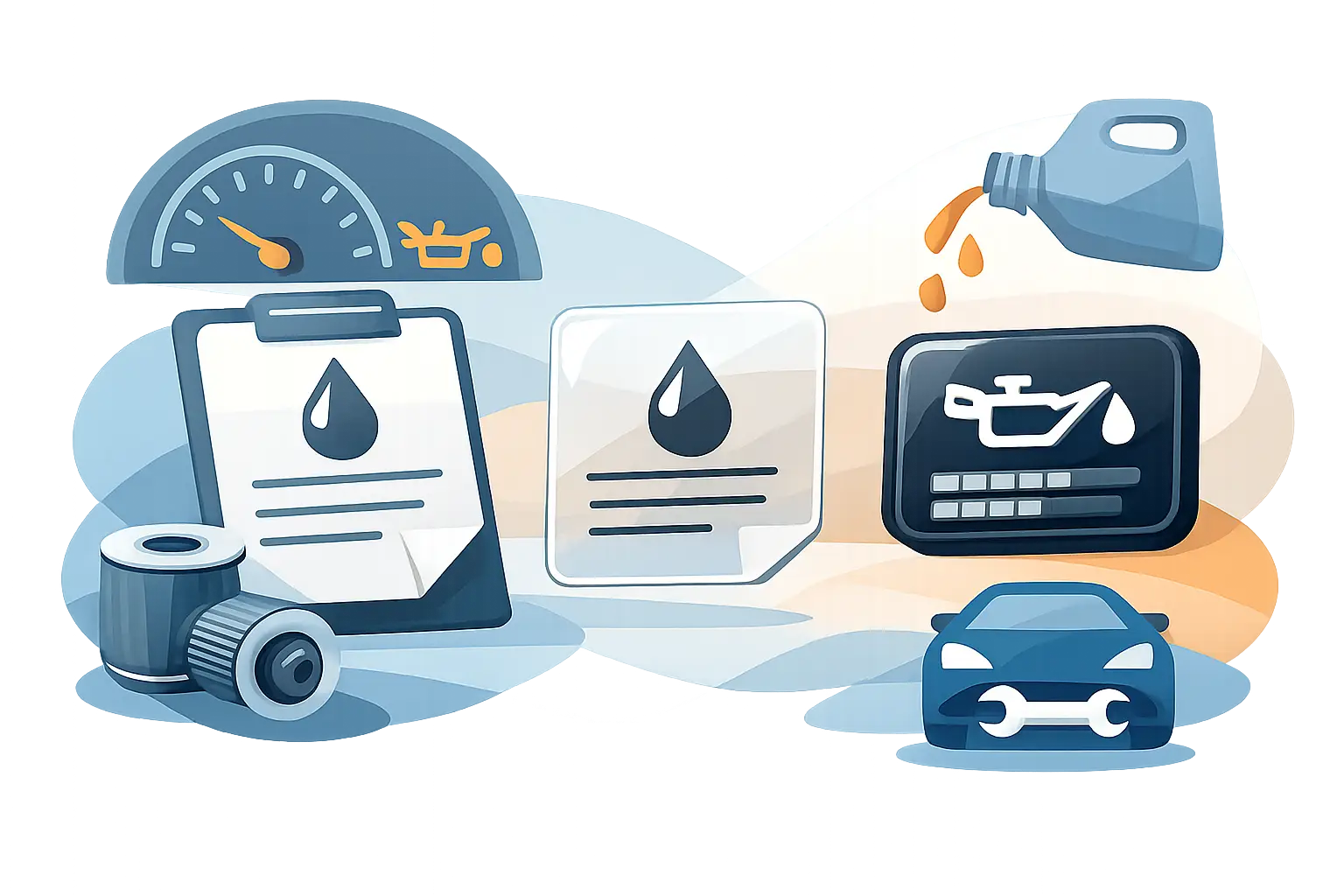
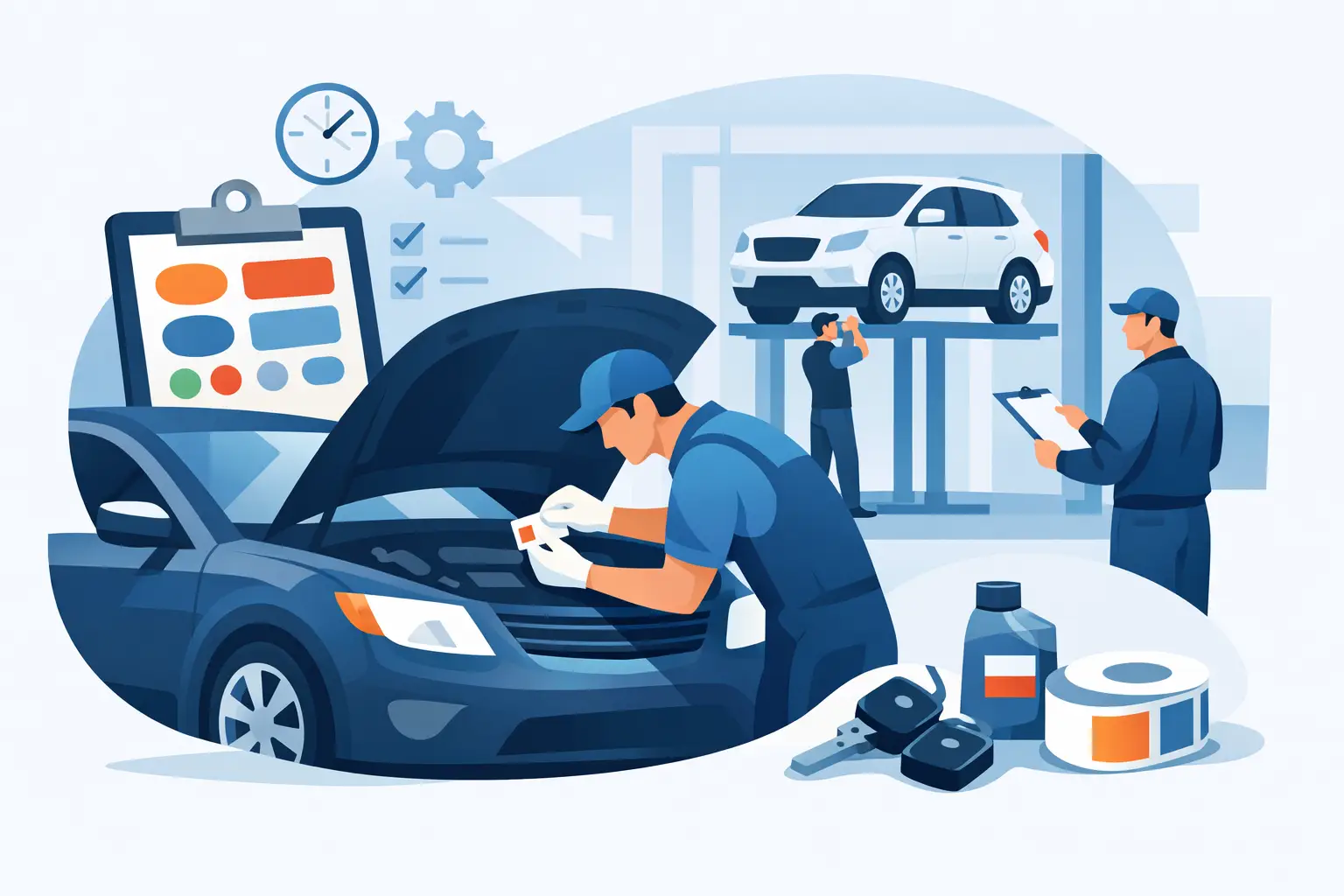
A missed oil change reminder does more than delay routine maintenance. It can cost your shop a repeat visit, create confusion at the counter, and make a simple follow-up feel harder than it should be. That is why automotive service labels still matter in busy service departments. They do a small job, but they support a much bigger system – customer retention, service accuracy, and day-to-day shop efficiency.
For repair shops, dealerships, tire centers, and detail operations, labels are not an extra. They are part of the workflow. When they are clear, durable, and easy to apply, they help your team move faster and give customers a visible reminder of what was done, what is due next, and who performed the work.
What automotive service labels actually do
At a glance, a service label looks simple. It may show the next oil change date, mileage interval, tire re-torque reminder, maintenance recommendation, or dealership information. But in practice, that label does several jobs at once.
First, it gives the customer a physical reminder they will see every time they get in the vehicle. Digital reminders are useful, but they compete with everything else on a phone. A label on the windshield or door jamb stays in view. For many drivers, that is still the easiest prompt to act on.
Second, it reinforces your shop name at the point of use. If the label includes your branding, phone number, or service department details, the customer does not have to search for your business later. When they are ready for their next appointment, your information is already in front of them.
Third, it helps your internal process. Shops that use the same label system consistently reduce guesswork. Advisors, technicians, and lot staff can quickly confirm what type of reminder was placed and whether the vehicle received the appropriate follow-up information.
Why good service labels matter more than cheap ones
Not all labels perform the same way. In a shop setting, that difference shows up fast.
A low-quality label may curl, fade, smear, or leave adhesive behind. That creates a poor impression and can turn a useful reminder into a nuisance. A label that becomes unreadable after a few weeks does not help retention. A label that peels off in heat or cold does not reflect well on your service standards either.
High-quality automotive service labels are built for repeat business use. That means materials that hold up on glass and other common surfaces, printing that stays legible, and adhesives that stick properly without creating cleanup problems. It also means a format your staff can use quickly at the end of every job.
The trade-off is straightforward. You may save a little on the front end with bargain labels, but if they fail in the field, the real cost is a weaker customer experience and a less dependable process.
The most common types of automotive service labels
Most automotive businesses do not rely on just one label. They use a small set of products tied to the services they perform most often.
Oil change reminders are the standard starting point. These usually include date, mileage, and shop contact information. Tire shops often need tire re-torque labels and rotation reminder labels that clearly communicate a required return visit or future maintenance interval. Dealers may add PDI stickers, CSI labels, stock identifiers, and dealer ID labels to support both operations and brand consistency.
Detailing businesses also benefit from reminder labels, especially when they offer scheduled upkeep services or seasonal packages. Tire storage operations may use labels to identify stored sets and keep customer information tied to the correct inventory. In each case, the label is doing operational work, not decorative work.
Choosing automotive service labels for your workflow
The right label depends on how your shop runs. A quick lube center has different needs than a full dealership service lane, and a tire shop has different customer touchpoints than a detail department.
Start with volume. If your staff applies labels all day, speed matters. Choose a size and layout that is easy to write on, easy to read, and quick to place correctly. If the label needs too much handling or forces staff to squeeze in information, it slows the lane down.
Then look at where the label will be used. Windshield labels need good visibility and clean removal when replaced. Door jamb or service history labels may need a different adhesive or size. If you are using multiple label types, consistency helps. When the design language is similar across products, your team spends less time figuring out what goes where.
Customization also matters, but only when it serves a purpose. Your logo, phone number, website name, or service message can add value if it makes rebooking easier and keeps your business top of mind. If a custom layout gets too crowded, though, readability suffers. Clear always beats busy.
Branding and retention are built into the label
A service label is one of the few printed items that can stay with the customer for months. That makes it more valuable than many shops realize.
Invoices get filed away. Emails get deleted. Text reminders are useful, but they are temporary. A well-printed service label stays visible in the vehicle and quietly reinforces your business every day. For independent shops competing with chains and dealerships, that visibility matters. For dealerships managing long-term service relationships, it helps support consistent return traffic.
This is where customization pays off. A clean branded label with accurate service information looks professional and gives the customer confidence that your operation is organized. That confidence is part of retention. People come back to businesses that feel dependable.
Durability is not optional
Vehicles face heat, cold, sunlight, and constant use. Labels that work fine in a controlled office setting may not hold up in an automotive environment.
That is why material selection matters. A service label should be easy to write on or compatible with your printing process, but it also needs to resist fading and premature failure. Adhesive performance matters just as much. If the label lifts too soon, the reminder disappears. If the adhesive is too aggressive, replacement becomes frustrating.
For shops serving customers across Canada and the United States, weather conditions can vary widely. A label that performs well through seasonal temperature swings gives you a more dependable result and fewer customer complaints.
Standard vs. custom labels
There is room for both, and the right choice often depends on where you are in your buying cycle.
Stock labels make sense when you need a proven format, quick ordering, and low complexity. They are ideal for common service reminders and high-volume everyday use. Custom labels make sense when branding, specific service messaging, or department identification has real operational value.
If you are ordering for multiple departments, custom options can help separate functions without changing your process. A tire department, service lane, and detail team may each need distinct labels, but they still benefit from a consistent print standard. That is where a supplier focused on automotive applications tends to be more useful than a general printer.
What to look for in a label supplier
Automotive businesses need more than a print vendor. They need a supplier that understands repeat ordering, practical layouts, and the pace of service operations.
Fast production matters because these are working materials, not occasional marketing pieces. Quality matters because labels represent your business long after the vehicle leaves the bay. Product range matters because many shops need more than one reminder format over time. And consistency matters because once your team is trained on a label system, you do not want surprises on the next order.
That is one reason businesses turn to specialized suppliers like StickerPlanet Canada. The advantage is not just printing. It is having access to products built around real shop use, with durable materials, clear formats, and ordering options that make sense for ongoing operations.
Small label, real business impact
The best automotive service labels do not call attention to themselves. They just work. They help your team finish jobs cleanly, make your service recommendations visible, and keep your name in front of the customer between visits.
If your current labels smear, peel, look generic, or slow down the lane, that is not a minor issue. It is a process problem with a customer retention cost attached to it. The right label system supports better communication, stronger branding, and a more consistent service experience.
For a working shop, that is the standard worth aiming for. Choose labels the same way you choose any other tool in your operation – based on reliability, speed, and how well they hold up when the day gets busy.