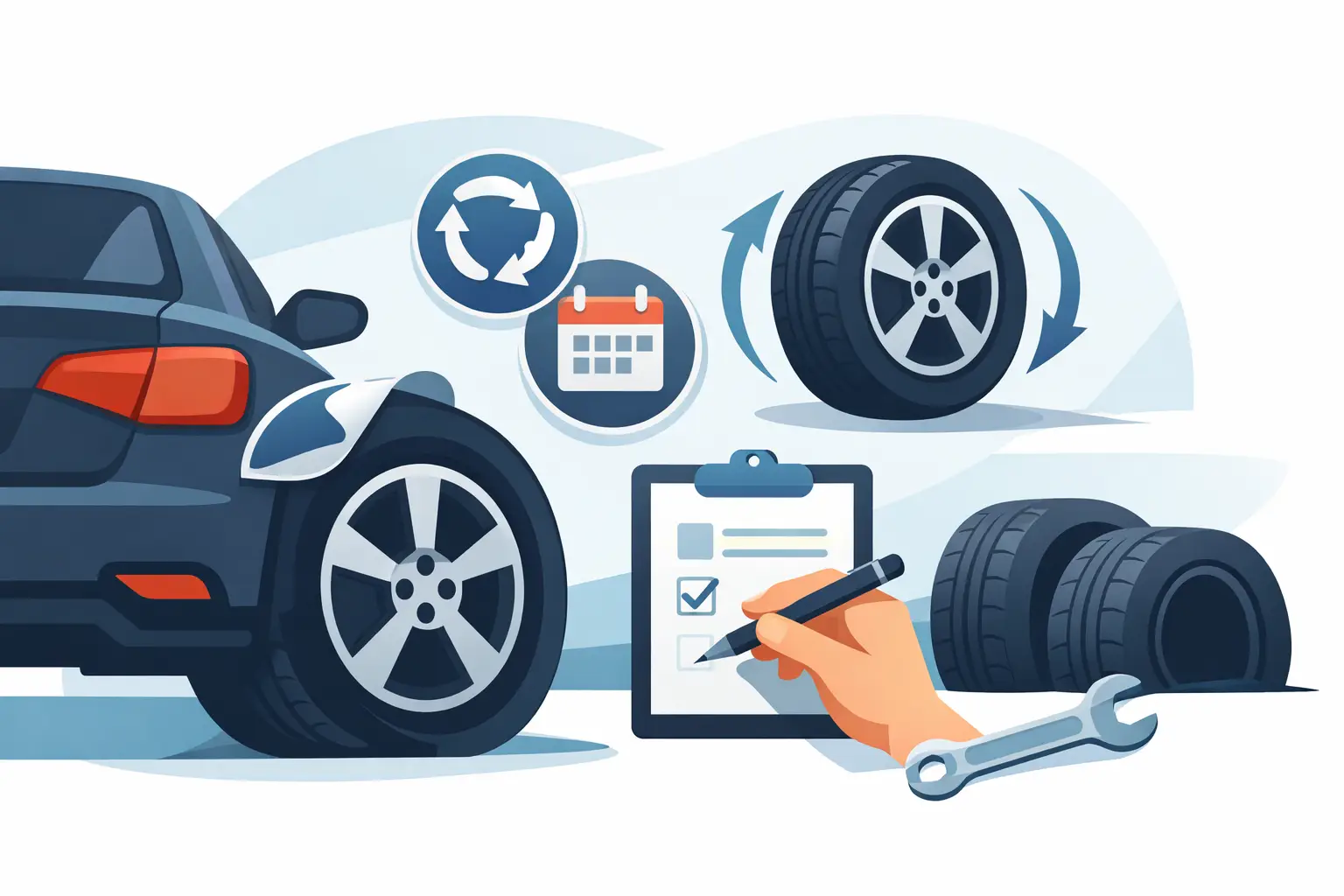
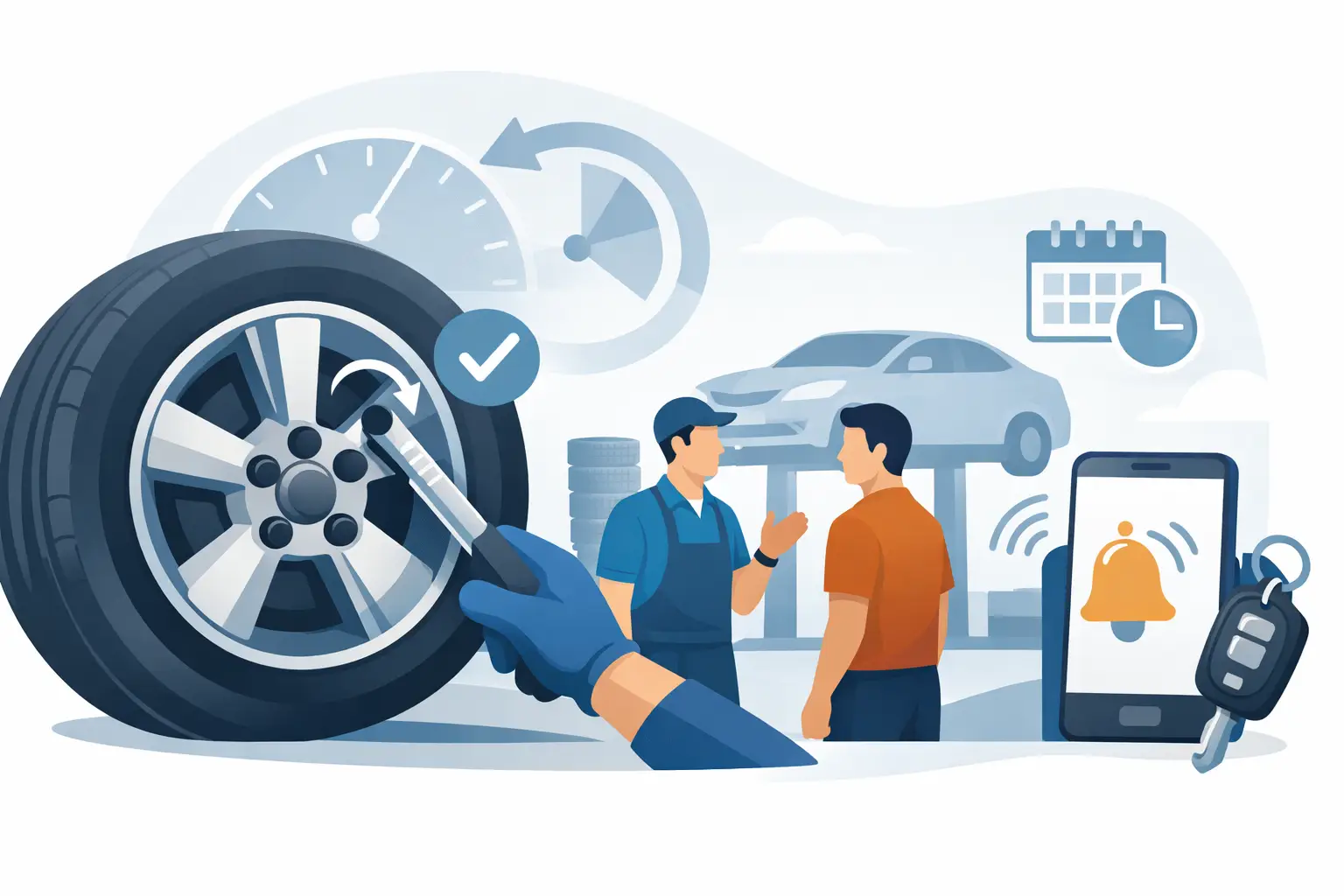
A wheel install is not finished when the vehicle leaves the bay. That is exactly why tire shops use re-torque reminders as part of the handoff, not as an afterthought. When customers return after driving the recommended distance, the shop has a better chance of confirming wheel fasteners are still set properly and documenting that the follow-up was clearly communicated.
Why re-torque reminders matter in daily shop operations
Any shop handling seasonal tire changes, new wheel installs, or rotation work knows the same problem: the service is completed correctly, but the customer still needs to come back for a quick re-torque check. Verbal instructions help, but verbal instructions alone are easy to forget. A printed reminder puts the message where the customer is likely to see it again.
That simple step does more than support safety communication. It also helps standardize the service process across advisors, technicians, and cashiers. When the reminder is built into every applicable job, the shop is not relying on one employee’s memory or one rushed conversation at the counter.
For busy tire shops, consistency is the real value. A re-torque reminder sticker or label turns an important follow-up into a repeatable procedure.
How tire shops use re-torque reminders at the point of service
Most shops use re-torque reminders in a very practical way. After wheel-related service is completed, the reminder is filled out with the return mileage or timeframe and placed in a visible location, often near the driver’s area or paperwork packet depending on the shop’s process. The goal is simple: make the next step obvious.
Some shops prefer a windshield or side-window label during the immediate post-service period because it is hard to miss. Others use a smaller service reminder format that matches their existing oil change or maintenance sticker system. The best choice depends on how the shop already communicates with customers and how much information needs to be written on the label.
The reminder works best when it includes plain language. Customers do not need a technical explanation of clamping force or wheel seating behavior. They need a clear instruction such as returning after 50 to 100 miles, or whatever interval the shop’s procedure specifies. If the wording is too dense or too vague, the sticker loses value.
Re-torque reminders reduce confusion at handoff
The pickup counter is one of the easiest places for details to get lost. Customers are thinking about payment, keys, timing, traffic, and the rest of their day. Even when an advisor explains the follow-up properly, there is a good chance that instruction gets forgotten before the customer reaches home.
A re-torque reminder helps reduce that drop-off. It gives the advisor a physical tool to support the conversation and gives the customer something concrete to reference later. That matters because many return visits are missed for one simple reason: the customer was told once and never reminded again.
This is especially useful during seasonal rush periods. When your team is moving cars quickly and every counter interaction is compressed, printed reminders protect consistency. Shops that depend only on verbal reminders tend to see more variation from employee to employee.
How tire shops use re-torque reminders to support documentation
There is also an internal benefit that many shops value just as much as customer communication. Re-torque reminders can support a more documented, process-driven service model. When a shop includes them routinely on applicable jobs, it shows that the follow-up instruction was not random or optional. It was part of the service procedure.
That does not replace proper repair orders, technician notes, or signed approvals. But it does strengthen the overall record that the customer was advised about the recommended return check. In a business where clear communication matters, having a visible, standardized reminder is a practical layer of protection.
Some operations go a step further and match the sticker wording to their service writing language. That keeps the message consistent between the repair order, advisor script, and printed reminder. It is a small detail, but small details are what make shop systems hold up under pressure.
The best reminder format depends on your workflow
Not every tire shop should use the exact same re-torque reminder. A high-volume retail tire counter may need a fast-fill label with only the key fields. A dealership service department may want branded reminders that match the rest of its service materials. An independent shop may prefer a stock format that is affordable, easy to store, and quick to apply.
The right format usually comes down to three things: visibility, writing space, and durability. If the label is too small, staff may skip details. If the adhesive or stock is poor, it may peel before the customer returns. If the design is cluttered, the message gets ignored.
That is why purpose-built automotive reminder products matter. Generic office labels can do the job once or twice, but they rarely hold up as a reliable shop system. Tire shops need materials that fit daily service use, write cleanly, and stay readable in real conditions.
Branding matters, but clarity matters more
Many shops want their business name, phone number, or logo on every customer-facing item. That makes sense. A re-torque reminder can reinforce shop identity and make it easier for customers to call back or return to the correct location.
Still, branding should not crowd out the core message. The reminder exists to communicate a required or recommended follow-up. If the layout gives more space to the logo than the return interval, the piece is not doing its job.
The strongest designs balance both needs. They keep the shop name visible while making the instruction impossible to miss. For operations that rely heavily on repeat service, that balance supports both customer retention and day-to-day clarity.
Re-torque reminders are a low-cost tool with operational value
Shops spend a lot of time looking for big improvements in efficiency, retention, and liability control. Sometimes the more useful fix is a small printed item that removes friction from a recurring process. Re-torque reminders are a good example.
They are inexpensive compared to the cost of communication failures. They are easy to train around. They help new staff follow the same procedure as experienced staff. And they fit naturally into the existing service flow without slowing the job down.
This is why many shops order them in volume and treat them as standard-use materials rather than occasional extras. When a product supports the same task over and over, consistency beats improvisation.
Where shops usually fall short
The weak point is rarely the idea of the reminder. It is usually execution. Some shops buy reminder labels, then leave them at the counter where only one employee remembers to use them. Others choose a format that is hard to write on, so staff stop filling them out completely. In some cases, the wording is too generic and customers do not understand whether the follow-up is optional.
The fix is straightforward. Keep the reminder stocked where the job closes out. Use wording your team can explain in one sentence. Make sure the layout gives enough room for mileage, date, or return interval. Then train the process the same way you train any other customer handoff step.
A reliable product helps here. High quality prints, readable layouts, and dependable adhesive are not extras in a shop environment. They are what make the reminder usable day after day.
Choosing re-torque reminders for repeat use
If you are ordering for a tire shop, service department, or garage, think beyond price per piece. The better question is whether the reminder will actually get used consistently. Fast turnaround matters when stock is running low. Durable materials matter when labels need to stay put. Clear print quality matters when customers need to read the instruction quickly.
For many operations, custom printing is worth it because it turns a basic reminder into a branded service tool. For others, stock re-torque labels are the better fit because they are simple, cost-effective, and easy to reorder. It depends on volume, workflow, and how standardized your service materials already are.
StickerPlanet Canada serves automotive businesses that need these kinds of repeat-use printed products to work without fuss. That is the real requirement. Not novelty, not decoration, just dependable materials that support shop operations.
A good re-torque reminder does one job well: it keeps an important follow-up from being forgotten when the vehicle is back on the road.