A customer pulls out of your lot with a fresh oil change, then gets busy for six months. The reminder you leave behind can be the small prompt that brings that vehicle back to your bays instead of to a competitor. When comparing oil change stickers vs hang tags, the real question is not which product is better in every case. It is which reminder your customers will see, understand, and act on after they leave.
Both products communicate the next recommended service date, mileage, and your shop information. Both can support repeat business. But they perform differently in the vehicle, at the service counter, and in the customer’s mind. Choosing the right one comes down to your service process, customer base, branding needs, and the type of follow-up your shop already uses.
What Oil Change Stickers Do Best
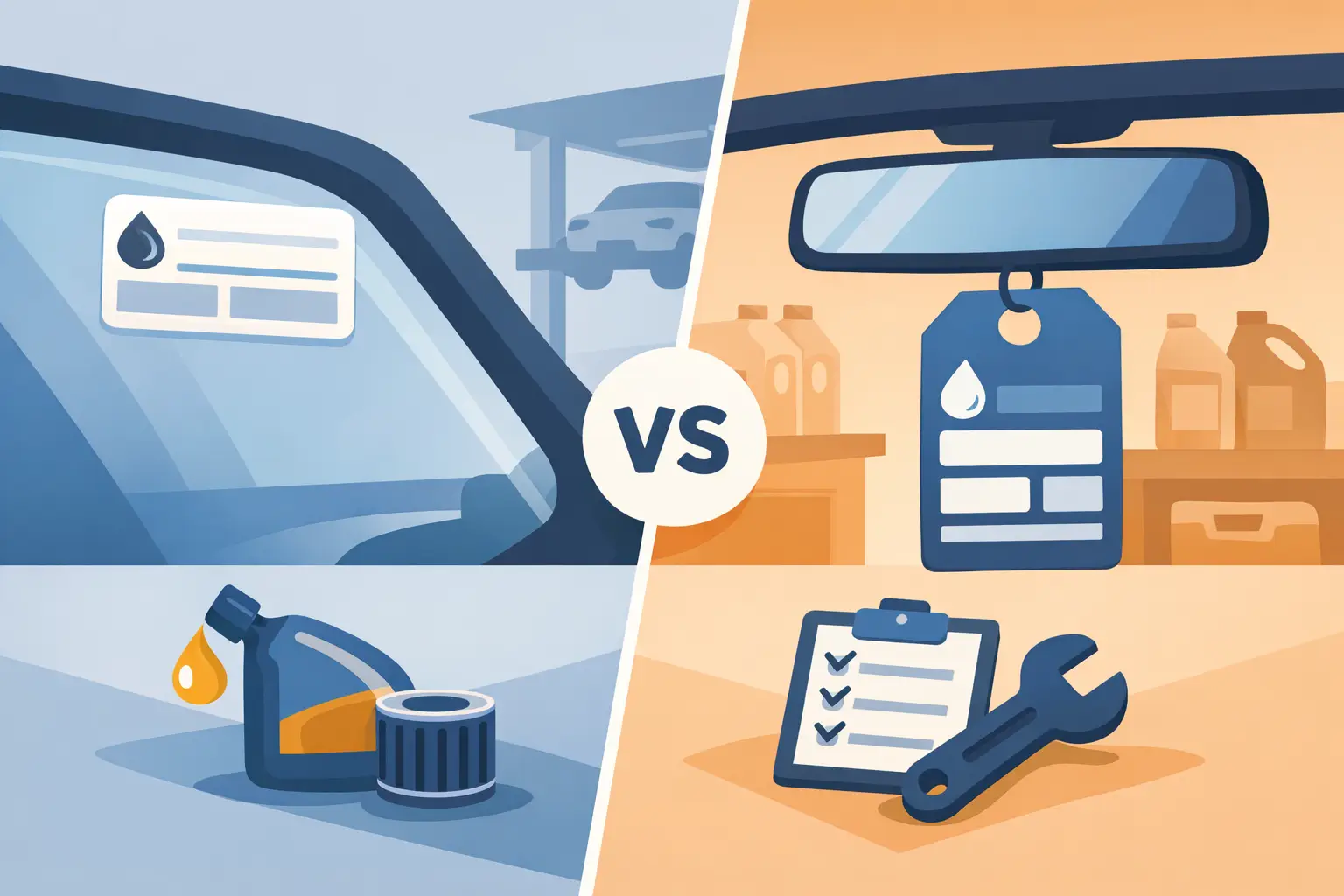
Oil change stickers are built for one job: stay visible after the service visit. Usually placed in the upper corner of the windshield, they give the driver a quick reference point every time they get behind the wheel. The date and mileage are in a consistent location, which makes the next service interval easy to check without searching through paperwork or a glove box.
For quick-lube centers, independent garages, and dealership service departments, that consistency matters. A technician can fill out and apply the sticker in seconds as part of the final quality-control step. The customer leaves with a clear reminder, and the advisor does not need to explain where to find it later.
A well-designed oil change sticker also carries your identity through the full ownership cycle. Your shop name, phone number, website, logo, or service message can remain in front of the customer for months. That is practical brand exposure, not decorative printing. When the sticker says the next oil change is due and makes it easy to contact your shop, it turns a maintenance reminder into a return-visit prompt.
The best stickers use clear writable fields, readable type, and an adhesive suited to windshield use. If the service details are difficult to write or the label is too small to read from the driver’s seat, the reminder loses value. Many shops choose custom formats that include their contact information and a familiar layout so every technician knows exactly where to write the date, mileage, and oil grade if needed.
Where Hang Tags Have an Advantage
Hang tags are typically placed on the rearview mirror at the end of service. They are larger than a windshield label, more noticeable in the first few days after a visit, and useful when you need room for more than a date and mileage. A tag can include maintenance recommendations, an appointment prompt, a promotion, seasonal service information, or a stronger call to action.
They are particularly useful for detailing businesses, full-service repair shops, tire shops, and dealerships that want to highlight several services at once. For example, a hang tag can remind a customer about an upcoming oil change while also noting tire rotation, brake inspection, or a seasonal check. It gives your team more space to communicate without crowding a small label.
Hang tags can also feel more personal at handoff. An advisor can point to the service details, circle a recommendation, or add a handwritten note. That makes them useful when the customer has deferred work or when the vehicle needs a follow-up inspection. The tag creates a physical prompt while the conversation is still fresh.
The trade-off is that a hang tag is temporary by design. Many customers remove it immediately because they do not want anything hanging from the mirror while driving. That is reasonable, and shops should never rely on a mirror tag being kept in place on the road. Once removed, it may end up in a cup holder, glove box, or trash. Its visibility can be excellent at delivery, but it is usually less dependable as a long-term reminder.
Oil Change Stickers vs Hang Tags: A Practical Comparison
If your priority is a durable, everyday reminder, oil change stickers are usually the stronger choice. They stay in the driver’s line of sight without taking up much space, and they fit naturally into fast, repeatable oil change workflows. They are also cost-effective for high-volume shops that need the same result on every vehicle.
If your priority is immediate visibility and more detailed communication, hang tags can do more. Their larger format allows for service recommendations, offer details, and additional contact information. They are a good fit for jobs where the service advisor has time to walk the customer through next steps.
The most effective option for many businesses is not strictly one or the other. A windshield sticker can serve as the long-term oil change reminder, while a hang tag reinforces a more urgent recommendation at pickup. This approach works especially well when a customer declined work, needs a tire re-torque after installation, or should return for a scheduled inspection.
Still, using both is not automatically necessary. If your shop completes high volumes of basic maintenance and wants a simple, consistent process, a quality custom sticker may be all you need. Adding a tag for every transaction can create extra labor and material cost without improving return rates. Use hang tags when the added space has a clear purpose.
Match the Reminder to Your Service Workflow
Your workflow should guide the purchase decision. Consider who fills out the reminder, when it is applied, and whether there is a final inspection step before delivery. A reminder product only works when your team uses it correctly every time.
For an express oil change operation, the windshield sticker is easy to standardize. Keep the stickers near the final service station, use a layout with clearly marked fields, and make application part of the technician’s completion checklist. The goal is simple: no vehicle leaves without the next-service information in place.
For a repair shop handling diagnostics, maintenance packages, and larger repairs, hang tags can support the advisor’s delivery process. They give the customer a short, clear takeaway when several maintenance items are discussed. Just keep the message focused. A crowded tag with too many offers or technical notes may not get read.
Dealerships and multi-location service businesses should also consider consistency across teams. Custom stickers and tags that use the same logo, phone number, and service language help create a recognizable experience at every location. They also reduce errors that happen when staff write contact details by hand or use mixed reminder products from different suppliers.
Design Details That Affect Return Visits
The design should make the next action obvious. For an oil change sticker, the service due date and mileage should be the most visible elements. Your business name and contact information should be easy to find, but they should not compete with the reminder itself. Clean layouts get used correctly and read quickly.
For hang tags, put the main message where the customer sees it first. If the tag is intended to prompt an oil change, lead with the due date and mileage. If it is a deferred-service reminder, name the service plainly and add a direct instruction such as “Call to schedule” or “Return for recheck.” Avoid vague language that leaves the customer unsure what to do.
Material quality matters as well. Windshield stickers need dependable adhesion and a writable surface that holds up under changing temperatures and sunlight. Hang tags need a clean print, a practical size, and a hole placement that allows staff to apply them quickly. Cheap materials can send the wrong message about an otherwise professional service experience.
StickerPlanet Canada produces automotive reminder products for the day-to-day demands of service businesses, including custom formats that keep your contact information and service details organized. The right stock or custom layout can save time at every vehicle handoff while keeping your shop top of mind.
Make the Reminder Part of a Retention System
Printed reminders work best when they support, rather than replace, your other customer follow-up efforts. Your point-of-sale records, text reminders, email notices, and service history can all reinforce the same recommended date or mileage. The sticker or tag is the physical version of that message, visible right where the customer needs it.
Train staff to verify the reminder details before the keys are handed over. A wrong mileage, missing date, or outdated phone number can undermine the whole process. It takes only a moment to check, and it shows customers that your shop pays attention to the details.
Choose the reminder that your team can apply consistently and your customers are most likely to see. For most oil change programs, that will be a clear, durable windshield sticker. When a vehicle needs a more detailed follow-up conversation, add a hang tag with a specific reason to return. A simple reminder used every time is far more valuable than a more elaborate one that never makes it onto the vehicle.