An oil change is complete, the vehicle is back on the road, and the customer has already moved on to the next part of their day. That is exactly why knowing how to use oil change reminder labels matters. A clear label in the right location gives your customer a simple, visible answer to one question: when should I come back?
For oil change centers, independent repair shops, dealerships, and garages, these labels are a low-cost tool with a direct impact on repeat service. They help customers remember the interval, reinforce your shop name, and make the next maintenance visit easier to schedule. The key is using them consistently and filling them out accurately.
Start With the Correct Service Interval
An oil change reminder label should reflect the actual recommendation for that vehicle, not a one-size-fits-all number your shop uses for every customer. Oil type, driving habits, vehicle age, manufacturer requirements, and fleet use can all affect the proper interval.
Check the vehicle’s owner information, service history, and the oil installed during the visit before writing the next due date and mileage. A vehicle using conventional oil may need a different schedule than one using full synthetic oil. A customer who drives short distances in heavy traffic or uses a vehicle for towing may also need more frequent service.
If the vehicle has an active oil-life monitoring system, use the label to support that system rather than contradict it. You can write a reasonable mileage and date reference while telling the customer to return sooner if the vehicle’s maintenance indicator appears. Clear communication avoids confusion and helps protect the trust your shop has earned.
How to Use Oil Change Reminder Labels at Checkout
The best time to apply an oil change reminder label is after the work order is complete and before the vehicle leaves your facility. Treat it as part of the final quality-control process, just like resetting the maintenance reminder, checking the oil level, and reviewing the invoice.
Before placing the label, write in the next recommended service date and mileage using a clear, permanent pen. Use a format your customers can read quickly. For example, writing “Next Service: Oct. 2026 or 78,000 miles” is clearer than a cramped note with incomplete numbers.
Include the current vehicle mileage on the repair order as well. If a customer calls later and asks whether they are due, your team can compare the current odometer reading to the documented recommendation. This keeps the label, your service records, and your customer conversation aligned.
A good checkout conversation takes only a few seconds. Point out the label and say something direct: “Your next oil service is due by 78,000 miles or October, whichever comes first.” Customers are more likely to keep the recommendation in mind when someone explains it rather than silently placing a sticker on the glass.
Choose a Location Customers Will Actually See
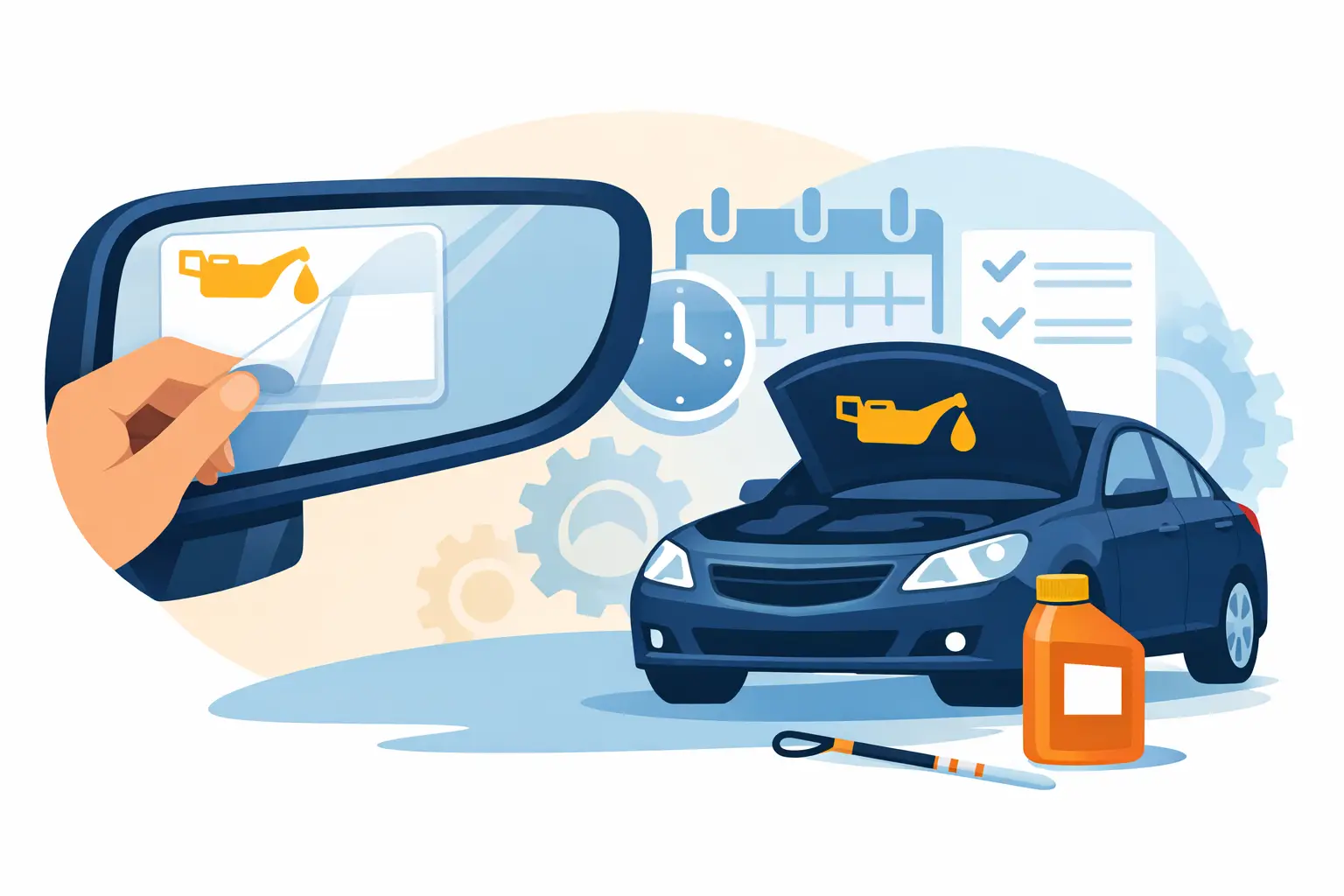
Most oil change reminder labels are placed on the upper corner of the windshield, typically on the driver’s side. This location is familiar to drivers and remains visible every time they get behind the wheel. Keep the label out of the driver’s primary field of vision and away from inspection stickers, registration decals, cameras, sensors, and other factory equipment.
The exact placement can depend on local regulations and the vehicle’s windshield design. Some shops prefer the lower driver-side corner, while others use an upper corner that does not interfere with existing decals. Pick a standard position for your business and train every technician or service advisor to use it.
Consistency makes your operation look organized. When labels are always in the same location, customers know where to look, and your staff can quickly confirm that a vehicle has gone through the final service process.
Clean the Glass First
A label is only useful if it stays attached and remains readable. Apply it to clean, dry glass. Dust, interior glass dressing, moisture, and fingerprints can prevent adhesive from bonding properly.
Use a clean cloth to wipe the placement area before applying the label. Avoid putting the sticker over a dirty surface or trying to reposition it repeatedly. Press firmly across the full label, especially around the edges, to reduce lifting over time.
For shops in regions with cold winters, high summer heat, or frequent temperature swings, dependable adhesive and quality stock matter. A cheap label that curls, fades, or falls off before the next interval does not support customer retention.
Make the Label Work for Your Shop
A reminder label should do more than display a mileage number. It should tell the customer where to return. Custom oil change reminder labels can include your business name, phone number, website, logo, address, or a short service message. That information is especially valuable when customers have several local repair options.
Keep the design practical. The due date and mileage need to be the largest, easiest-to-read elements on the label. Your branding should be clear without crowding the writing area. If technicians need to squeeze information into a tiny box, the label will be less useful to both the customer and your staff.
Consider the services you want to promote based on your shop’s actual workflow. A general repair shop may add a line for tire rotation or a reminder to schedule seasonal maintenance. A quick-lube business may focus strictly on the next oil service. Dealers may include department contact information and service hours. The right format depends on what you want customers to do next.
StickerPlanet Canada offers stock and custom automotive reminder labels designed for repeat shop use, helping service businesses maintain a consistent look while keeping key maintenance details visible.
Build Labels Into a Repeatable Process
The label should not depend on one employee remembering it on a busy Saturday. Make it a documented step in your service process. The technician can complete the mileage and date, while the service advisor confirms the information with the customer at pickup. Or, your advisor can prepare the label from the finalized work order before handing over the keys.
Either approach works if responsibilities are clear. What causes problems is a vague process where everyone assumes someone else applied the sticker.
Use the same date convention and mileage standard across your team. For example, decide whether your labels show the month and year only, a full date, or a specific mileage interval. Standardization reduces writing mistakes and makes the label look professional.
It also helps to keep labels, pens, and glass-cleaning supplies at the point where vehicles are finalized. If supplies are stored in a back office or separate bay, employees are more likely to skip the step during a rush.
Avoid Common Oil Change Reminder Label Mistakes
The most common mistake is writing an inaccurate next-service interval. This can happen when staff use an old shop standard, overlook synthetic oil, or fail to account for the customer’s maintenance schedule. Accuracy comes first because the label represents your professional recommendation.
Another issue is incomplete information. A label with only “Next Oil Change” and a mileage number may be enough for some customers, but a date is useful for low-mileage drivers. Conversely, date-only reminders can be unhelpful for customers who cover a lot of miles every month. Providing both gives customers a clear return point.
Poor handwriting also creates unnecessary friction. If a customer cannot tell whether the label says 68,000 or 88,000 miles, the reminder has failed. Use a dark permanent marker, write deliberately, and replace labels that are smudged or damaged before the vehicle leaves.
Finally, do not use the label as a substitute for proper records or customer outreach. It is one touchpoint in a complete retention process. Service records, appointment reminders, invoice notes, and respectful follow-up all have a role. The windshield label remains effective because it is visible at the exact moment the customer starts the vehicle.
Keep Your Reminder Program Useful Over Time
Review your label process every few months. Ask your advisors whether customers mention the stickers, check whether labels are staying in place, and look for patterns in return visits. If the labels are frequently missing or customers are unclear about their intervals, adjust the material, placement, or wording.
A well-used oil change reminder label is small, but it carries a practical message: your shop knows the vehicle, has documented the service, and is ready when the customer needs maintenance again. Make it accurate, visible, and consistent, and it will keep working long after the vehicle leaves your bay.