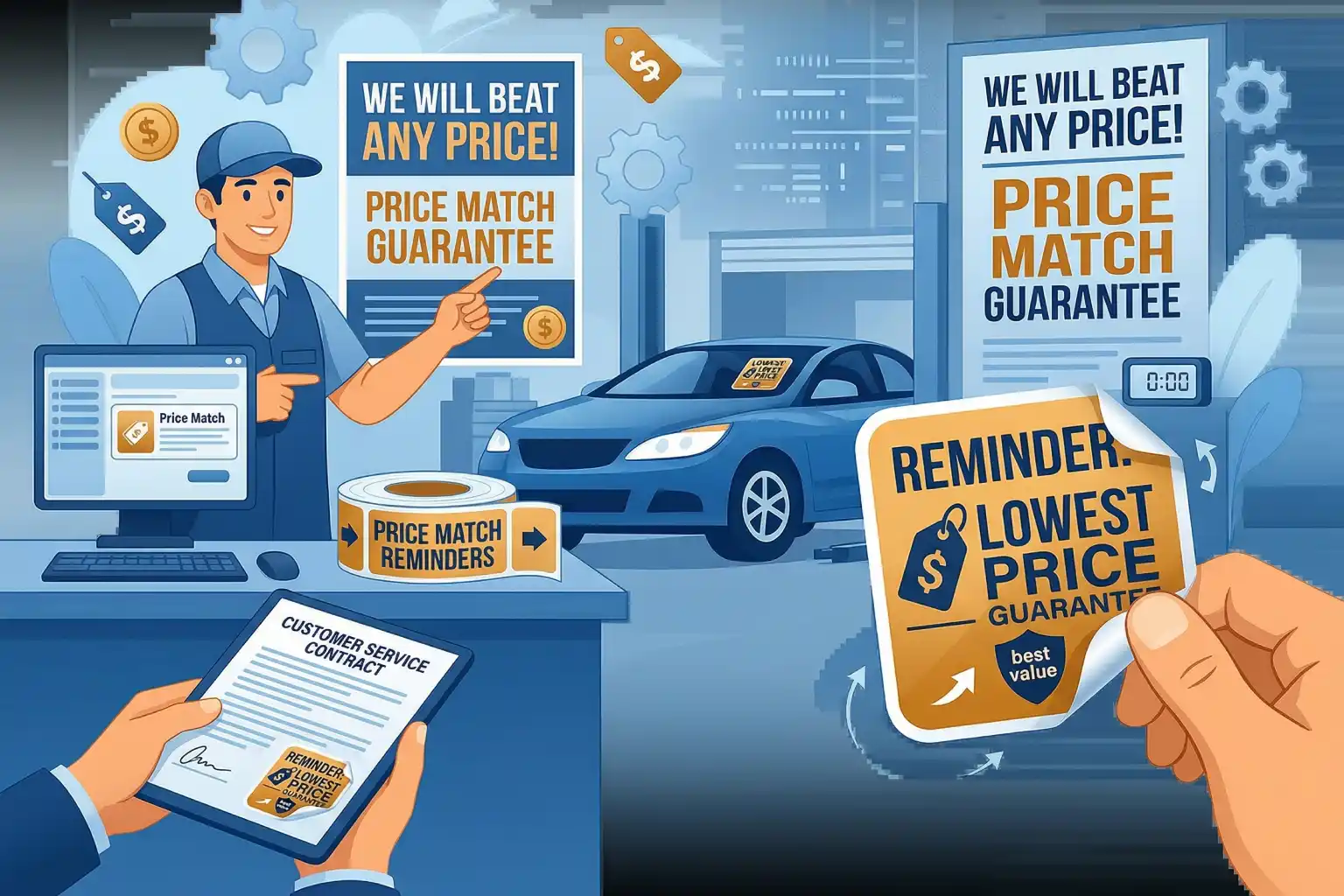

A service reminder label gets only a few seconds of attention, but it does a job that matters for months. It sits on the windshield, visor, door jamb, or service record as a quiet follow-up tool. For shops and dealerships, that small label often plays a direct role in repeat visits, service interval compliance, and brand recall. That is exactly why the future of service reminder labels matters. These products are not going away. They are becoming more precise, more durable, and more useful in day-to-day operations.
Why the future of service reminder labels still matters
There is a common assumption that digital communication will replace printed reminders. In real shop environments, that is only partly true. Text messages, CRM reminders, and email campaigns are useful, but they depend on clean customer data, opt-ins, and attention at the right moment. A printed reminder label is different. It stays with the vehicle and is visible when the customer is actually using it.
That visibility is the reason these labels continue to perform. A customer may ignore an email about their next oil change, but they are far less likely to ignore a date and mileage reminder placed where they see it every week. For busy service departments, printed reminders are still one of the lowest-cost retention tools available.
The future is not print versus digital. It is print working alongside digital. Shops that understand that are in a better position to keep customers coming back.
What will change in the future of service reminder labels
The biggest change is not that labels will become flashy. It is that they will become more operationally useful. Buyers are looking for products that support consistency, speed, and customer retention without adding complexity at the counter or in the bay.
Better durability and material performance
Shops need labels that stay readable in heat, cold, moisture, and sunlight. A reminder sticker that curls, fades, or smears before the next service date does not just fail as a product. It reflects poorly on the business that applied it.
That is why material quality will matter even more going forward. The market is moving toward dependable adhesives, cleaner removability where needed, and face stocks that handle handwriting or printed data without smudging. For many businesses, the future is less about adding features and more about getting the basics right every time.
Clearer branding without slowing down workflow
More shops want reminder labels to do two jobs at once. First, they need to communicate the next service interval. Second, they need to reinforce who performed the work. That means custom logo placement, service contact details, and layouts that stay legible even when space is tight.
There is a trade-off here. A label can carry too much information and become hard to read quickly. The best designs in the years ahead will stay simple, but they will be better organized. Strong hierarchy, clean boxes for date and mileage, and consistent brand presentation will matter more than decorative design.
More product specialization by service type
Generic oil change stickers are still useful, but shops are increasingly buying for specific workflows. Tire re-torque labels, tire rotation reminders, maintenance light stickers, detailing reminders, PDI stickers, and storage labels all serve different operational needs. That trend will continue because service departments want printed tools that match the job instead of forcing one label to cover everything.
This is especially true for multi-service businesses. A dealership or independent shop may need separate label types for quick lube, tire services, seasonal storage, and inspection processes. The future points toward more specialized formats, not fewer.
Print and digital will work together
Some buyers hear the word future and assume the answer is QR codes on everything. In practice, that depends on the customer base and the service model. A QR code can be useful if it takes the customer somewhere specific, such as service booking, maintenance tips, or dealership contact information. If it is added with no real purpose, it becomes clutter.
The better approach is to treat the label as the physical anchor and digital tools as support. The printed reminder stays visible in the vehicle. The digital system handles follow-up messaging and booking prompts. When those two pieces align, shops create multiple touchpoints without overcomplicating the customer experience.
For many operations, the most effective future setup will still start with a well-made printed reminder. Digital channels can add convenience, but the label remains the durable, always-on cue.
Customer expectations are changing
Customers may not think much about labels until they do not have one. When a vehicle owner wants to know when their next service is due, a clear reminder removes friction. It answers a simple question immediately.
That matters because customer expectations are shifting toward convenience and clarity. People want service providers to make ownership easier. A reminder label supports that in a very direct way. It tells the customer what was done, when to return, and who to call. No app login. No searching through old invoices.
As expectations rise, sloppily written or poorly printed labels will stand out in the wrong way. Clean print quality, readable layouts, and durable stock help communicate professionalism. It is a small item, but customers often take small details as a sign of overall service quality.
Operational efficiency will shape buying decisions
The future of service reminder labels is not only about the customer. It is also about what helps the service team move faster and stay accurate. In a busy shop, every extra step adds up.
Labels that are easy to write on, easy to peel, and quick to apply save time across hundreds or thousands of service visits. That may sound minor, but repeated daily, it affects workflow. Service managers and buyers are increasingly choosing products based on how well they fit actual shop use, not just unit price.
This is where consistency becomes valuable. A dependable label format helps technicians and advisors follow the same process every time. That supports fewer missed reminders, cleaner presentation, and better retention results. StickerPlanet Canada has built much of its catalog around exactly that kind of repeat-use practicality, and that direction reflects where the market is heading.
Customization will keep growing, but within limits
Customization is becoming standard, especially for dealerships, franchise service locations, and independent shops focused on retention. Businesses want their name, phone number, logo, and service messaging on the label because generic reminders do less to bring the customer back to the same location.
Still, customization only works if it protects usability. If the logo is too large, the writing area suffers. If too many fields are added, the sticker becomes slow to complete. The best custom labels balance identity with function.
That balance will define good buying decisions in the next few years. A well-designed custom reminder label should look branded and professional while staying fast for staff to use.
Compliance, traceability, and service documentation
For some businesses, reminder labels are not just marketing tools. They also support process control and documentation. Tire re-torque reminders, PDI labels, and maintenance indicators can help service teams communicate requirements clearly and consistently.
This is another area where the future looks practical rather than flashy. Buyers want labels that reduce confusion, support standard operating procedures, and provide a clear reference point for staff and customers. In environments where repeatability matters, a reliable printed label continues to earn its place.
What smart buyers should look for now
If you are buying with the future in mind, the question is not whether labels will still matter. The question is whether your current label program is doing enough. Start with durability, readability, and speed of use. Then look at whether your labels support your brand and your specific service mix.
A low-cost sticker that fails early, looks generic, or slows down staff is not actually saving money. A better label can help protect retention and improve consistency without changing your process in a major way. That is usually the better investment.
The shops that get the most from service reminder labels are not chasing trends. They are choosing dependable products that fit their workflow, represent their business properly, and keep customers informed at the right moment.
The future of service reminder labels will belong to businesses that treat them as working tools, not throwaway extras. When a label is built well and used consistently, it keeps doing its job long after the vehicle leaves the bay.