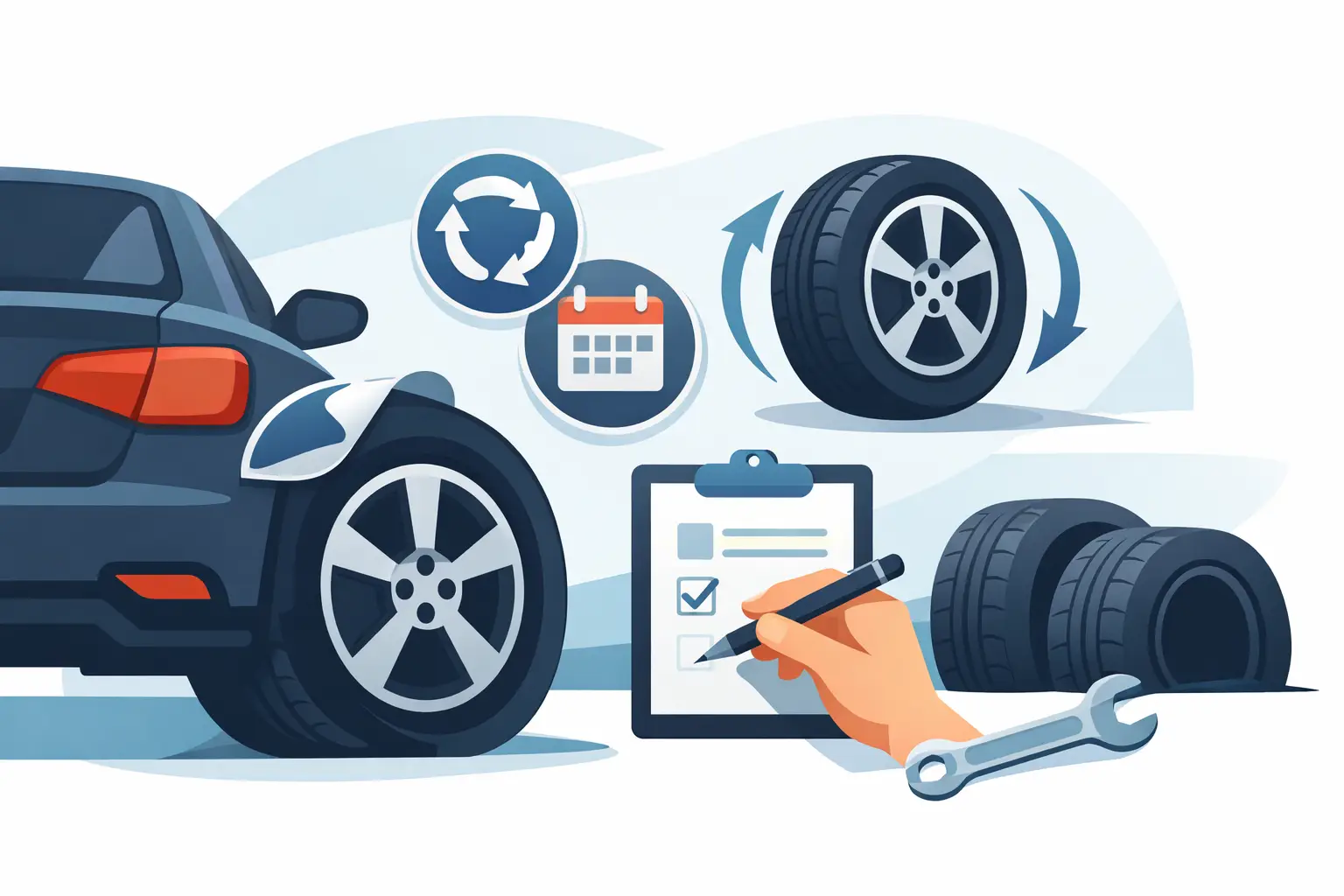
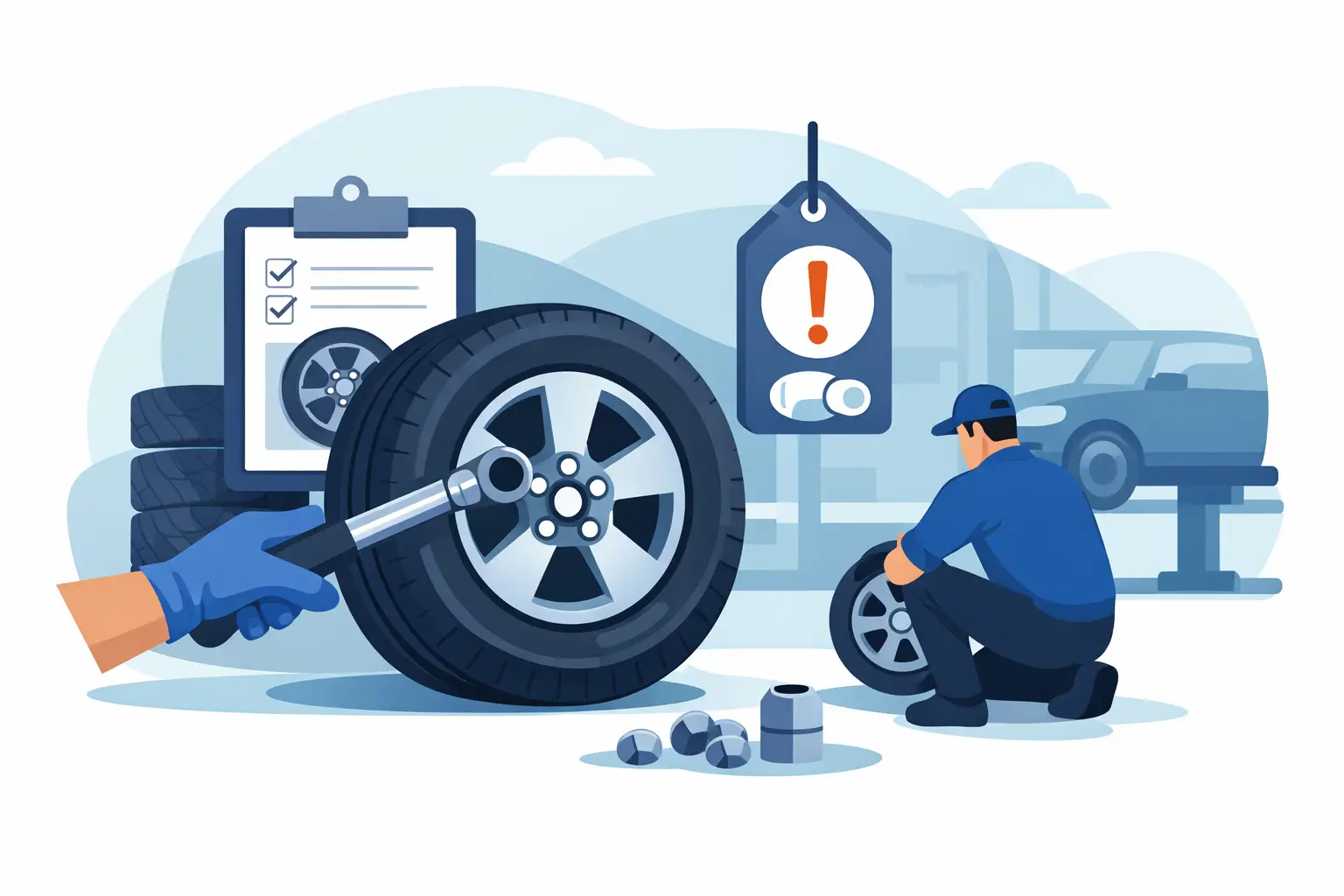
A wheel installation is not truly finished when the vehicle leaves the bay. Why do tire shops need retorque labels? Because the customer needs a clear reminder that wheel fasteners may require a follow-up check after driving, and the shop needs a consistent way to communicate that service step. A small label can reinforce a safety message, reduce misunderstandings, and keep your name in front of the customer after the appointment.
For busy tire shops, dealerships, and repair garages, retorque labels are a low-cost operational tool. They support the work your technicians have already completed while giving customers a straightforward instruction they can act on.
Why Do Tire Shops Need Retorque Labels?
Wheel nuts or lug bolts are tightened to a specified torque during installation. After a wheel has been removed and reinstalled, the initial settling period matters. Changes in wheel seating surfaces, paint, corrosion, debris, temperature, and normal driving forces can affect the clamping relationship between the wheel and hub.
A retorque reminder tells the vehicle owner to return after a stated distance or time period for a technician to verify wheel-fastener torque. The exact recommendation should follow the vehicle manufacturer, wheel manufacturer, and your shop’s procedures. Many shops use a reminder after approximately 50 to 100 miles, but there is no one-size-fits-all interval that replaces manufacturer guidance.
The label does not do the mechanical work. It does something just as practical: it makes the instruction visible when the customer is at home, at work, or planning their next drive. A verbal reminder at the counter can be forgotten before the customer reaches the parking lot. A properly placed sticker provides a second, durable touchpoint.
A Clear Reminder Supports Safer Wheel Service
Tire service often moves quickly, especially during seasonal changeovers. Customers may be focused on the new tires, the invoice total, or getting back to work. They may not understand why a follow-up torque check is recommended, even when your service advisor explains it clearly.
A retorque label turns that explanation into a direct action item. It can state the return interval, identify the shop, and include space for the service date or mileage. This reduces the chance that a customer treats the recommendation as optional or loses the information in a stack of paperwork.
That clarity also protects the customer experience. If a driver has questions later, they can see what was recommended and contact the shop that performed the work. The label helps establish that your team gave appropriate follow-up instructions rather than leaving the customer to guess.
There is a practical limit here. Labels should never be used as a substitute for proper installation practices, calibrated torque tools, technician training, wheel inspection, or documented shop procedures. They work best as one part of a disciplined tire-service process.
Retorque Labels Reduce Communication Gaps
Every shop has heard some version of, “Nobody told me I had to come back.” Sometimes the customer was told, but the message got lost in a rushed handoff. Sometimes a family member picked up the vehicle. Sometimes the person at the counter used different wording than the technician.
A standardized label helps close those gaps. Every customer receives the same visible message, regardless of who wrote the repair order or delivered the vehicle. This consistency is particularly useful for multi-technician shops and dealerships where several people may handle one service visit.
The most effective labels keep the message simple. They should identify the recommended retorque timing, provide a place to write key service details when needed, and display a phone number or shop name. Too much fine print can make a reminder less useful. The customer should understand the next step in a few seconds.
They Create a Reason for Customers to Return
A retorque visit is a service follow-up, but it is also a customer retention opportunity. When the driver returns, your team can verify the wheel fasteners, answer questions, check the tire-pressure monitoring system if applicable, and look for obvious concerns such as uneven wear or damage.
That return visit keeps the relationship active. Customers are more likely to remember a shop that gives them a clear next step and handles it professionally. It can also lead naturally to future tire rotations, inspections, alignments, oil changes, and seasonal tire storage conversations.
The goal is not to pressure a customer into additional work. It is to make follow-up service easy and useful. When the retorque check is organized, quick, and clearly explained, it demonstrates that the shop cares about the job after payment has been processed.
A Label Reinforces Your Shop’s Professional Standards
Customers judge a tire shop on details they can see. A clean service area, a clear invoice, and a useful reminder label all signal that your operation has a process. That matters because most customers cannot personally evaluate torque procedures or wheel installation techniques. They evaluate the evidence of care around the service.
Generic retorque labels are a practical choice when speed and price are the priority. Custom labels can add your business name, phone number, logo, service message, or location details. For independent shops, that branding helps prevent the reminder from becoming just another anonymous sticker. For dealerships and larger service departments, it supports a more uniform customer experience across every vehicle.
The right choice depends on volume and how you use the label. A shop handling frequent seasonal tire changes may benefit from a larger supply of standardized labels. A shop building long-term local recognition may find that customized labels provide more value over time. In either case, durable print quality matters. A label that curls, fades quickly, or leaves a poor impression does not support the professional image you want to maintain.
Where and How to Use Retorque Reminder Labels
Placement should be visible without interfering with safe vehicle operation or blocking critical information. Many shops place reminders in a location the driver is likely to see, such as the inside of the windshield in an appropriate area. Your team should choose a consistent placement that works with your service process and local requirements.
Before applying the label, make sure the surface is clean and dry. If the sticker includes fields for date, mileage, torque information, or return interval, complete them legibly. A blank reminder is less helpful than no reminder because it leaves the customer unsure of what to do.
Train advisors and technicians to use the same explanation when handing over the vehicle. A short message works well: the wheels were installed and torqued to specification, and the customer should return at the listed interval for a quick torque check. That conversation, paired with the label, creates a clear record of the recommended follow-up.
Choosing Labels That Work in Real Shop Conditions
Retorque labels are used in environments where speed matters. They should be easy to peel, easy to write on when necessary, and adhesive enough to remain in place for the intended reminder period. The design should be readable at a glance, with enough space for the information your team actually uses.
Consider whether your shop needs a stock message or a custom layout. A stock label can be ready for immediate use and works well for straightforward programs. A custom version may be better if you want to include your shop identity, a specific return interval, appointment instructions, or a consistent service message across several locations.
StickerPlanet Canada produces practical automotive reminder labels for service businesses that need repeatable, professional materials. Whether you select a standard format or a custom design, the priority is the same: make the next step clear for the customer and simple for your staff.
A retorque label takes only seconds to apply, yet it can keep a critical follow-up instruction visible long after the vehicle leaves your lot. When it is part of a consistent wheel-service process, it helps customers remember what to do next and gives them a solid reason to come back to the shop that took care of them.